
THE EARLY FRAMES
In days past, architects were the frame designers for their wealthy patrons’ art collections.
Frame shops did not exist until the mid 19th century. The new technologies of mass production allowed the creation of machined moldings which spawned an entire industry, but as picture frames became more affordable, the designs often overlooked centuries of exquisite design based on classical discipline and craftsmanship.
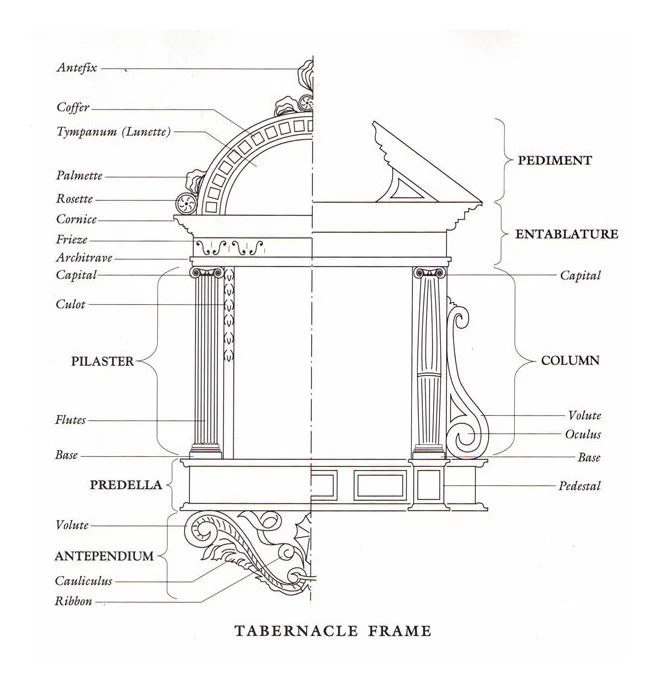
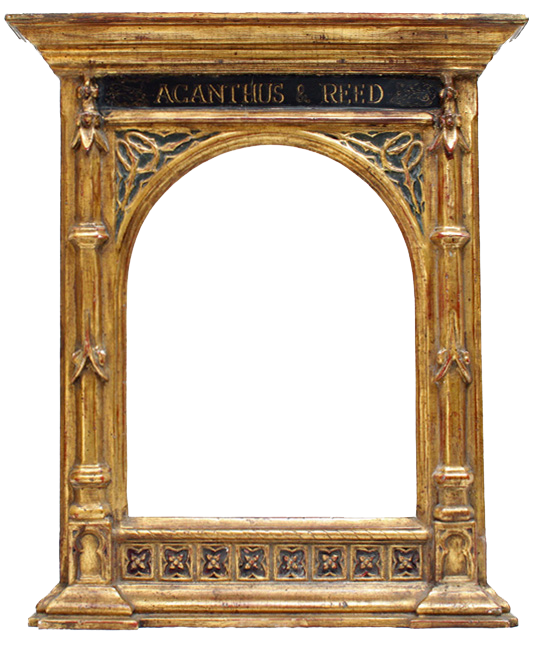
Before the Industrial Revolution, wealthy patrons had their art set in frames designed by architects. The early Renaissance saw the development a frame fashioned after the facade of ancient Greek and Roman temples. This frame is called the Tabernacle, a fine example of how architecture and frame design go hand in hand.
A century ago, Stanford White designed contemporary versions for his clients. The floral motifs, columns, dentils and other architectural icons are dramatic and beautiful in the intimate venue of a Tabernacle frame. This is the foundation of the Cassetta or board frame with its embellishments of beads, reeds, egg and dart, guilloche, sgrafitto, and many more examples taken from the vocabulary of architecture.
More recently Le Corbusier and Mies Van der Rohe inspired the narrow wood and aluminum frames commonly used on contemporary art.
Look around your home and you will see how architects literally frame our lives – window sashes, door surrounds, crown moldings, baseboards, etc. At Acanthus & Reed, our admiration and respect for architecture has inspired our picture framing journey since the very beginning.